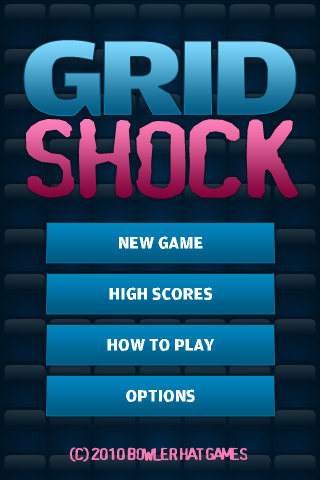
My most recent mobile conversion, Gridshock, has gone live in the iPhone App Store. Unlike Chroma Circuit, Gridshock required some heavier fundamental layout changes, but I think I kept the difficulty balance and speed at a level that’s about the same as the original. I even took some time to add a couple new features.
First, I added the Shock powerup to the mix. When you match five or more lights, one of them won’t disappear. Instead, it upgrades to add the powerup, and it can be matched again. When matched a second time, it will remove an entire row of lights. Very useful when things get fast and frenzied, and the grid has almost overflowed.
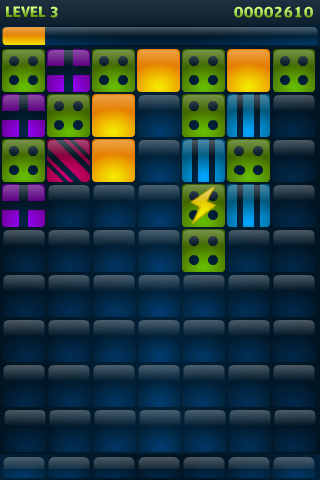
On the Options screen is a new setting called “Patterns”. For players who might have difficulty telling the difference between some of the game’s colors, Patterns mode adds a unique and high-contrast shape to each color.
What’s that I said about Android?
On other fronts, you might be interested to know that I’ve had a chance to preview an upcoming version of Adobe AIR for the Android mobile operating system. Adobe’s Ted Patrick recently showed off a few sneak peek Android screenshots, and he includes both Chroma Circuit and Gridshock in the mix.
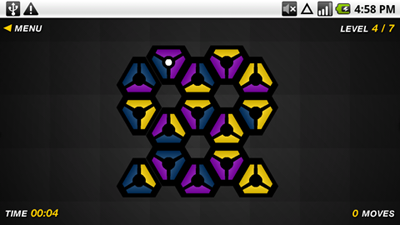
The only thing I needed to focus on for Android from a development perspective was ensuring that my games would fit well in different screen resolutions. Christian Cantrell’s recent article, Authoring mobile Flash content for multiple screen sizes, has a wealth of information on this subject, and I suggest any Flash developer expecting to target mobile check it out. I was thinking about writing a blog post about multi-screen content myself, but Christian covered all the details I would have, so I recommend it highly.